
Managed 5G connectivity • UAE
Managed Dual-SIM 5G and Bandwidth Aggregation in the UAE
Dubaitech supplies, configures and manages resilient business connectivity using the Teltonika RUTX50, two UAE SIMs on a monthly service and the failover, load-balancing or bonding architecture your site actually requires.
A single RUTX50 switches between its two SIMs for resilience; it does not use both SIMs simultaneously. Combining bandwidth from multiple live links requires a separately designed multi-router or SD-WAN bonding solution.
Connectivity as a managed service
One monthly service for the router, SIMs and operating responsibility
The service is intended for locations that need a deployable primary link, a backup to fixed internet or a more resilient multi-link design. Dubaitech assesses coverage and traffic needs, prepares the equipment, supplies two SIMs, configures switching rules and supports the agreed service after installation.
The monthly proposal defines the selected mobile operators, data allowances, fair-use terms, public or private addressing, hardware ownership, monitoring, support window, replacement handling and minimum term. These items are not assumed until they are written into the signed scope.
A strong fit for
Branches, retail sites and offices that need an independent backup to a fixed circuit
Construction, logistics and temporary locations where fixed connectivity is delayed or impractical
CCTV, access-control, IoT and operational systems that need managed cellular connectivity
Events, pop-up sites and mobile operations requiring a controlled, deployable internet service
Monthly managed scope
Define the equipment, connectivity and support as one accountable service
The final inclusions depend on the selected design and proposal. The managed scope can combine these service components.
Configured RUTX50 platform
Supply or manage the industrial 5G router, approved accessories, power arrangement and saved baseline configuration for the agreed site.
Two monthly UAE SIMs
Provide two SIM subscriptions with the operator pairing, data allowance, roaming position, fair-use terms and billing responsibility stated in the proposal.
Failover and traffic policy
Configure health checks, SIM switching, fixed-WAN backup or multi-link steering according to the approved service mode and application priorities.
Signal and antenna design
Assess placement, cabling and an indoor or compatible outdoor antenna option where site conditions require improved signal positioning.
Remote management
Apply agreed device monitoring, configuration backup, firmware planning, usage visibility and alerts through the selected management arrangement.
Managed support
Provide scoped remote troubleshooting, configuration changes, operator escalation and hardware support during the service hours and response targets in the agreement.
Choose the correct architecture
Failover, load balancing and bonding solve different problems
The terms are often used interchangeably, but they do not create the same result. Dubaitech confirms the desired behavior before selecting the bill of materials.
Mode 1
Dual-SIM failover
Continuity and simpler monthly service
One RUTX50 with two SIMs. The router uses switching rules so the standby SIM can take over when the active mobile service fails or meets a defined condition.
Important boundary
The RUTX50 has one cellular modem, so its two SIMs are not active at the same time and their speeds are not added together.
Mode 2
Multi-WAN load balancing
Distributing users or sessions across live links
Use a fixed circuit plus cellular, or multiple routers and an appropriate gateway, to steer separate connections according to health, policy and application requirements.
Important boundary
A single download or session normally remains on one path unless a separate bonding technology is introduced.
Mode 3
True bandwidth bonding
Combining capacity for supported traffic
Use multiple simultaneously active WAN links with a compatible SD-WAN bonding appliance or service and a remote aggregation endpoint where required.
Important boundary
Performance, application behavior, encryption overhead, latency and failover characteristics must be validated for the proposed platform and carriers.
Managed hardware platform
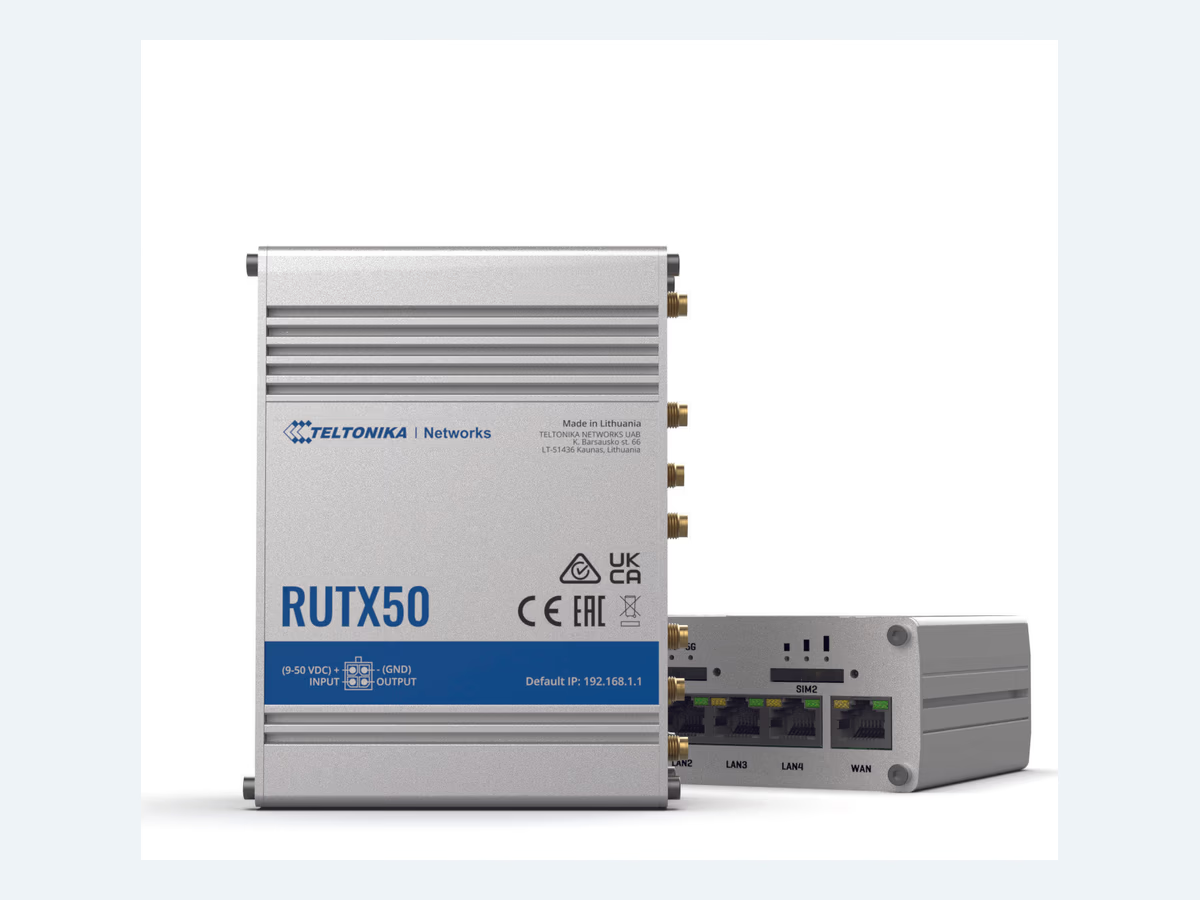
Teltonika RUTX50 for resilient 5G edge connectivity
The user-supplied RUTX50 datasheet and current Teltonika product information describe an industrial dual-SIM 5G router with automatic failover and backup-WAN scenarios. Dubaitech validates the regional model, firmware, accessories and configuration at quotation time.
5G standalone and non-standalone support, with backward compatibility for 4G LTE and 3G
Two SIM slots with automatic failover, backup-WAN and configurable switching scenarios
Five Gigabit Ethernet ports, including a configurable WAN port, plus dual-band Wi-Fi 5
Supported VPN, firewall, routing, data-limit and remote-management capabilities in RutOS
Industrial aluminium enclosure with DIN-rail and surface-mounting options
GNSS, digital input/output and USB interfaces for suitable operational use cases
Published maximum link rates are modem capabilities, not a promised site speed. Real throughput depends on operator coverage, spectrum, signal quality, antenna placement, congestion, plan limits, protocol overhead and the connected network.
Outdoor deployment option
Move the radio and antenna to a better signal position when the site requires it
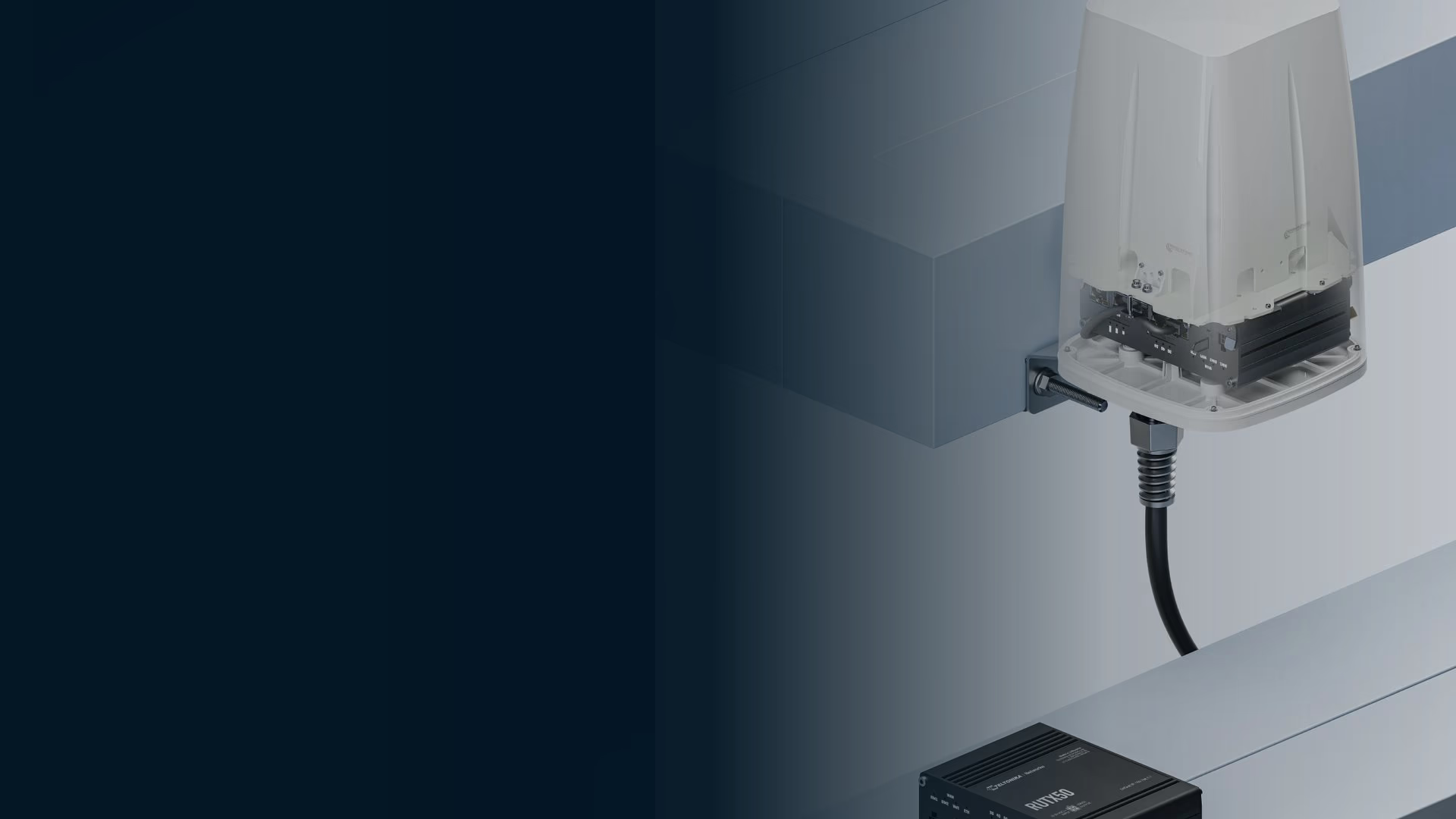
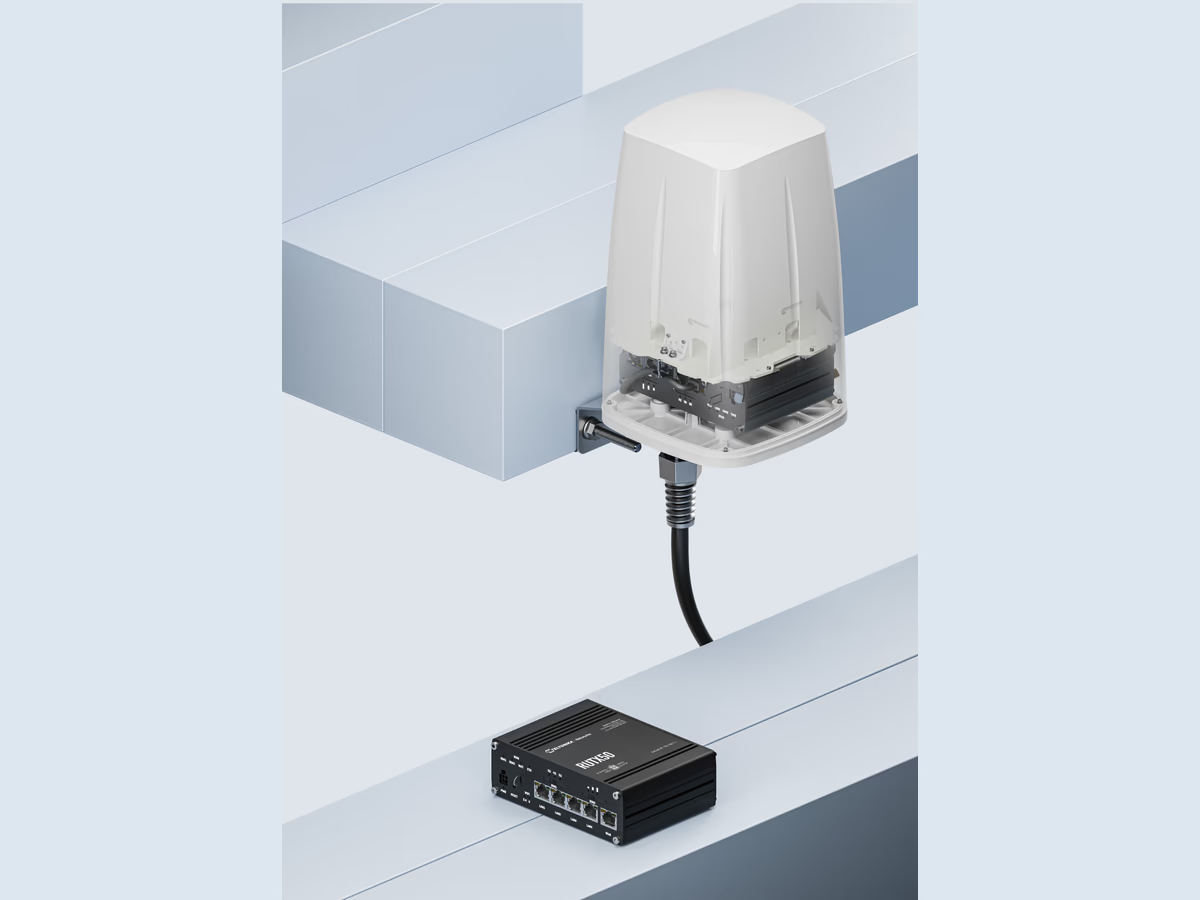
The supplied PR1ICA70 document describes an IP67 outdoor enclosure and omnidirectional 5G, Wi-Fi and GNSS antenna designed to contain a compatible RUTX50. It can be assessed for wall, ceiling or mast installation, subject to structural, power, cable-route, lightning, grounding, access and environmental requirements.
Assessment and deployment
Design the monthly service around the site, not a headline speed
01
Discover
Confirm the locations, users, applications, current circuits, availability goal, IP requirements, data demand, security and target date.
02
Survey
Review operator coverage, indoor signal conditions, mounting, power, antenna position, cabling and integration with the existing firewall or LAN.
03
Design
Select failover, load balancing or bonding; document the router count, SIM pairing, data plan, accessories, addressing and operating responsibilities.
04
Deploy and test
Stage the configuration, install the equipment, test primary and failure paths, confirm critical applications and record the accepted baseline.
05
Manage
Monitor and support the agreed components, review usage and signal information, plan updates and report exceptions under the contracted service scope.
Service outputs
Know what the managed connectivity handover should contain
Connectivity design showing WAN paths, failover or bonding behavior and network handoff
Device, SIM, operator, plan, data allowance, renewal and ownership record
Approved router baseline, administration model and configuration backup
Installation notes covering power, mounting, antennas, signal observations and cabling
Failover, recovery and application test record with known limitations
Monitoring, support hours, response targets, escalation path and monthly exclusions
Technical and commercial boundaries
Mobile connectivity still depends on the radio network and the signed plan
Operator coverage maps and device capability do not guarantee indoor signal, latency, throughput or uninterrupted service. A survey and live testing are needed where connectivity is business-critical, and no cellular design removes every shared tower, power, upstream or geographic risk.
Carrier-grade NAT can prevent inbound access. Static or public IP, private APN, VPN, content filtering, data pooling, roaming, overage handling and security controls must be designed and priced explicitly. The customer remains responsible for lawful use and any application-specific regulatory requirements.
Confirm these inputs in the proposal
Carrier pair and network independence at the actual site
Normal and peak data demand, upload needs and acceptable latency
Public IP, inbound access, VPN and private-APN requirements
Indoor signal, antenna location, cable loss and physical installation constraints
Power backup, firewall integration, LAN capacity and Wi-Fi coverage
Hardware ownership, replacement, contract term, data limits and overage policy
Standard support coordination: Monday–Friday: 9 AM–5 PM; enhanced coverage only when contracted
Frequently asked questions
What to clarify before choosing a dual-SIM or bonded service
No. The RUTX50 has two SIM slots but one cellular modem, so the SIMs are used for switching and failover rather than simultaneous aggregation. True bonding requires multiple active WAN links and an additional compatible bonding or SD-WAN design.
The managed service is designed to include two SIM subscriptions. The quotation identifies the operators, data allowance, fair-use or overage terms, public-IP position, billing responsibility, activation date and minimum service term.
It can be assessed as a primary service for suitable temporary, remote or rapidly deployed sites, or as backup to a fixed circuit. Suitability depends on coverage, traffic, latency, data usage, public addressing and the business impact of mobile-network variation.
Yes, as a separately designed option using multiple active links and a compatible SD-WAN or bonding platform. The architecture, remote endpoint, supported applications, overhead, licensing and expected behavior must be confirmed before it is presented as aggregated bandwidth.
The router can switch to the secondary SIM when configured health or service conditions are met. Detection time, active sessions, DNS, VPNs and public IP may change during failover, so Dubaitech tests the agreed applications rather than describing every switch as seamless.
These options depend on the selected operator and plan. They must be requested during design because carrier-grade NAT, inbound access, VPN topology and security requirements can materially change the service and monthly price.
No. Indoor antennas may be sufficient at some sites. The compatible outdoor enclosure and antenna can be assessed when signal position, building materials, weather exposure or equipment placement justify it, subject to safe mounting and cabling requirements.
The signed plan defines monitoring, configuration changes, usage review, firmware planning, operator escalation, replacement handling, support hours and response targets. Standard coordination follows Dubaitech business hours unless enhanced coverage is contracted.
Connected Dubaitech services
Integrate the managed link with the network around it
Use these services when the requirement includes Wi-Fi, firewall policy, managed support or a wider site rollout.
Business WiFi Services
Design the indoor wireless network that distributes the managed internet service to users and devices.
Explore Business WiFi ServicesFortinet Firewalls
Integrate cellular backup or multiple WANs with firewall policy, VPNs and secure SD-WAN requirements.
Explore Fortinet FirewallsIT AMC Services
Coordinate connectivity monitoring and support within a wider managed IT agreement.
Explore IT AMC ServicesNew Office IT Setup
Deploy temporary or resilient connectivity alongside switching, Wi-Fi, security and workplace systems.
Explore New Office IT SetupScope the monthly connectivity service
Request a Managed Connectivity Assessment
Share the location, applications, current internet, expected data use, failover or aggregation goal, public-IP needs and target date. Dubaitech will assess coverage and prepare a qualified monthly service proposal.
View all contact options